The Beginning: Motor Courts and Simple Hotels (1905-1940)
Early Las Vegas hotels were simple affairs. The Hotel Nevada (1906, later renamed Golden Gate) was downtown's first hotel, offering basic rooms primarily for railroad workers. These early establishments provided beds and little else—no casinos, no entertainment, no luxury amenities.
During the 1920s and 30s, small motor courts opened along Highway 91 (later the Strip) to serve automobile travelers. These were humble places—small cabins or rooms with minimal furnishings, sometimes lacking private bathrooms. The Apache Hotel (1932) was considered upscale by Depression-era standards despite being modest by later measures.
Downtown Fremont Street developed a concentration of hotels and casinos. The Las Vegas Club, Boulder Club, and Pioneer Club catered to workers from the nearby Boulder Dam project. These establishments offered gambling, cheap food, and basic rooms—the formula that would define Las Vegas hospitality.
The Birth of the Resort Casino (1941-1955)
Everything changed with El Rancho Vegas (1941), the first resort-style hotel-casino on what would become the Strip. El Rancho offered 110 rooms, a casino, restaurant, and showroom in a ranch-themed property. The innovation was the integrated resort concept—guests could stay, dine, gamble, and be entertained without leaving the property.
The Last Frontier (1942) followed suit, then the Flamingo (1946) raised the bar dramatically. Built by mobster Bugsy Siegel, the Flamingo cost $6 million (over $80 million today) and featured luxurious rooms, lush landscaping, and upscale dining. Though it initially lost money and Siegel was murdered, the Flamingo eventually succeeded, proving the viability of luxury resort gambling.
The 1950s brought explosive growth. The Desert Inn (1950) catered to upscale guests with golf courses and elegant accommodations. The Sahara (1952) brought African themes and modern architecture. The Sands (1952) became legendary for its Copa Room entertainment. These properties established Las Vegas as a destination, not just a stopover.
Each property tried to differentiate itself through themes and amenities. The Dunes (1955) featured Arabian nights décor. The Riviera (1955) brought modern high-rise architecture. The formula was established: distinctive themes, quality entertainment, and enough rooms to support major casino operations.
The Golden Age: Elegance and Excess (1960s-1970s)
Caesars Palace (1966) revolutionized Las Vegas hotel design by creating a fully immersive themed environment. Every detail reinforced the Roman theme—statues, columns, toga-clad cocktail waitresses, and spectacular fountains. Caesars showed that a strong theme could differentiate a property and command premium prices.
The International (1969, later Las Vegas Hilton, now Westgate) became the world's largest hotel with 1,512 rooms. Its massive scale showed that Las Vegas could support properties far larger than traditional hotels. Elvis Presley's opening performance began a legendary residency that defined the venue.
The 1970s brought mixed results. Some properties like Caesars thrived and expanded, while others struggled with economic recession and Atlantic City competition. The MGM Grand (1973, now Bally's) was the world's largest hotel-casino when it opened, but a devastating 1980 fire that killed 85 people highlighted safety issues in older properties.
Despite challenges, iconic properties emerged. The original MGM Grand (1973) brought Hollywood glamour. Circus Circus (1968) introduced family-friendly elements. The Tropicana evolved into a classic Vegas resort. These properties defined what Las Vegas hotels meant: large-scale, themed, entertainment-focused destinations unlike anything else in America.
The Mega-Resort Revolution (1989-2000)
Steve Wynn's Mirage (1989) sparked the greatest building boom in Las Vegas history. The $630 million resort was a gamble—many thought it too expensive to succeed. The Mirage proved spectacularly successful, generating over $1 million daily in its first year and triggering copycat mega-resorts.
The 1990s brought unprecedented construction. Excalibur (1990) offered 4,008 rooms in a medieval castle. Treasure Island (1993) featured a pirate battle show. The Luxor (1993) built a 30-story pyramid with 4,407 rooms. The new MGM Grand (1993) opened with 5,005 rooms, the world's largest hotel. These weren't just hotels—they were destinations unto themselves.
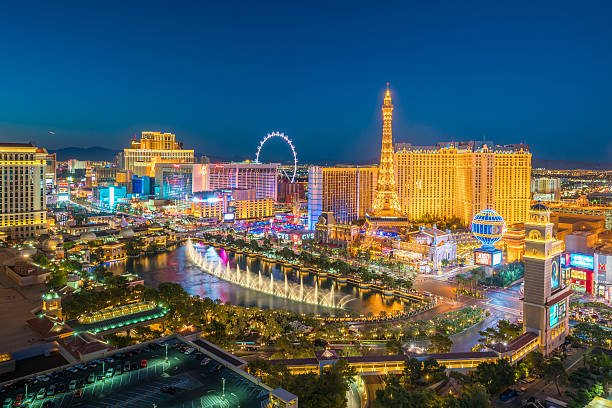
The late 1990s brought even more ambition. Bellagio (1998) cost $1.6 billion and brought European elegance to the Strip with its famous fountains, art gallery, and luxurious accommodations. The Venetian (1999) recreated Venice with canals, gondolas, and the Grand Canal Shoppes. Paris Las Vegas (1999) built a half-scale Eiffel Tower and Arc de Triomphe.
These mega-resorts changed the business model. Rather than cheap rooms to attract gamblers, they offered luxury accommodations at premium prices. Instead of subsidized dining, they featured celebrity chef restaurants. The goal shifted from "heads in beds" to capturing affluent customers who would spend money across multiple revenue streams.
Corporate Consolidation and Brand Hotels (2000-2010)
The 2000s saw major corporate consolidation. MGM Resorts purchased Mandalay Resort Group, controlling much of the Strip. Harrah's Entertainment (later Caesars Entertainment) bought Caesars, Bally's, Paris, and others. Large corporations brought professional management but sometimes reduced the individualistic character that made each casino unique.
New properties brought contemporary sophistication. Wynn Las Vegas (2005) and Encore (2008) emphasized elegance over themes. The Palazzo (2007) expanded the Venetian. Planet Hollywood (2007) rebranded the Aladdin with a pop culture theme. These properties catered to affluent guests seeking sophistication rather than kitschy themes.
CityCenter (2009-2010), a $9.2 billion development, represented the peak of pre-recession ambition. Aria, Vdara, Mandarin Oriental, and Crystals shopping created a city-within-a-city. The contemporary architecture and high-end positioning targeted sophisticated international visitors rather than middle-American tourists.
The 2008 financial crisis devastated Las Vegas. Projects were cancelled, properties went bankrupt, and visitation plummeted. The Fontainebleau, nearly complete, sat vacant for years. The crisis forced properties to focus on efficiency and profitability rather than endless expansion.
The Modern Era: Technology and Experience (2010-Present)
Recovery brought renewed focus on guest experience and technology. The Cosmopolitan (2010) opened with a young, hip vibe emphasizing unique experiences over traditional luxury. Its unconventional approach attracted millennials who might have dismissed Vegas as outdated.
Properties invested heavily in technology. Mobile check-in, digital room keys, app-based services, and in-room tablets became standard. Casinos implemented sophisticated player tracking and personalized marketing. The goal was creating seamless, personalized experiences that kept guests engaged.
Non-gaming revenue became increasingly important. Day clubs, nightclubs, celebrity chef restaurants, and high-end retail generated significant profit. Some properties generated over 60% of revenue from non-gaming sources—a dramatic shift from the gambling-focused model of earlier eras.
Resorts World (2021) marked the first new Strip resort in over a decade. The $4.3 billion property brought Asian-influenced luxury and cutting-edge technology, including a massive LED facade visible from the airport. Its opening showed continued confidence in Las Vegas's future despite the pandemic's devastating impact.
Downtown Revival and Off-Strip Development
While attention focused on the Strip, downtown Las Vegas underwent revitalization. The Fremont Street Experience (1995) created a pedestrian mall with LED canopy. The D Las Vegas and Downtown Grand brought new investment. The Plaza and Golden Nugget renovated extensively, attracting visitors seeking vintage Vegas character at lower prices.
Off-Strip properties like The Palms, Red Rock Resort, and M Resort catered to locals and visitors seeking alternatives to Strip crowds. These properties emphasized amenities—movie theaters, bowling alleys, superior restaurants—rather than casino floor space.
The Arts District, Fremont East, and other neighborhoods developed boutique hotels and unique experiences. The Container Park and various independent properties showed Las Vegas could support diverse lodging beyond mega-resorts.
Conclusion: Ever-Evolving Hospitality
Las Vegas hotels evolved from simple motor courts to spectacular mega-resorts that defy imagination. Each era brought innovation—the integrated resort concept, immersive theming, unprecedented scale, corporate professionalism, technological integration. Through boom and bust, competition and consolidation, Las Vegas hotels continued reinventing themselves.
Today's Las Vegas offers remarkable diversity—from Golden Gate's historic downtown charm to Wynn's contemporary luxury, from themed spectacles like Luxor's pyramid to sophisticated properties like Bellagio. The constant is innovation: Las Vegas hotels never stop evolving, always seeking the next breakthrough that will capture imaginations and separate guests from their money.
The willingness to tear down the old and build something new—most dramatically when the Dunes, Sands, and other legendary properties were imploded to make way for new mega-resorts—shows Las Vegas's commitment to constant reinvention. This forward-looking approach ensures Las Vegas hotels remain among the world's most spectacular destinations.
Las Vegas hotels continue evolving with new properties, renovations, and innovations constantly reshaping the landscape. What remains constant is the commitment to spectacular, over-the-top hospitality that makes Las Vegas unique in the world.
Historical information compiled for informational and entertainment purposes