The Early Days: A Desert Oasis
Long before the neon lights and mega-resorts, Las Vegas was simply a desert oasis with natural springs that provided water for travelers crossing the harsh Mojave Desert. The area's name, Spanish for 'The Meadows,' reflected these precious water sources that sustained life in an otherwise unforgiving landscape.
The modern history of Las Vegas began in 1905 when the San Pedro, Los Angeles and Salt Lake Railroad established a stopover point. The railroad auctioned off 110 acres of land, and the town of Las Vegas was officially founded on May 15, 1905. For the next two decades, Las Vegas remained a small railroad town with a few thousand residents.
The Hoover Dam: A Turning Point
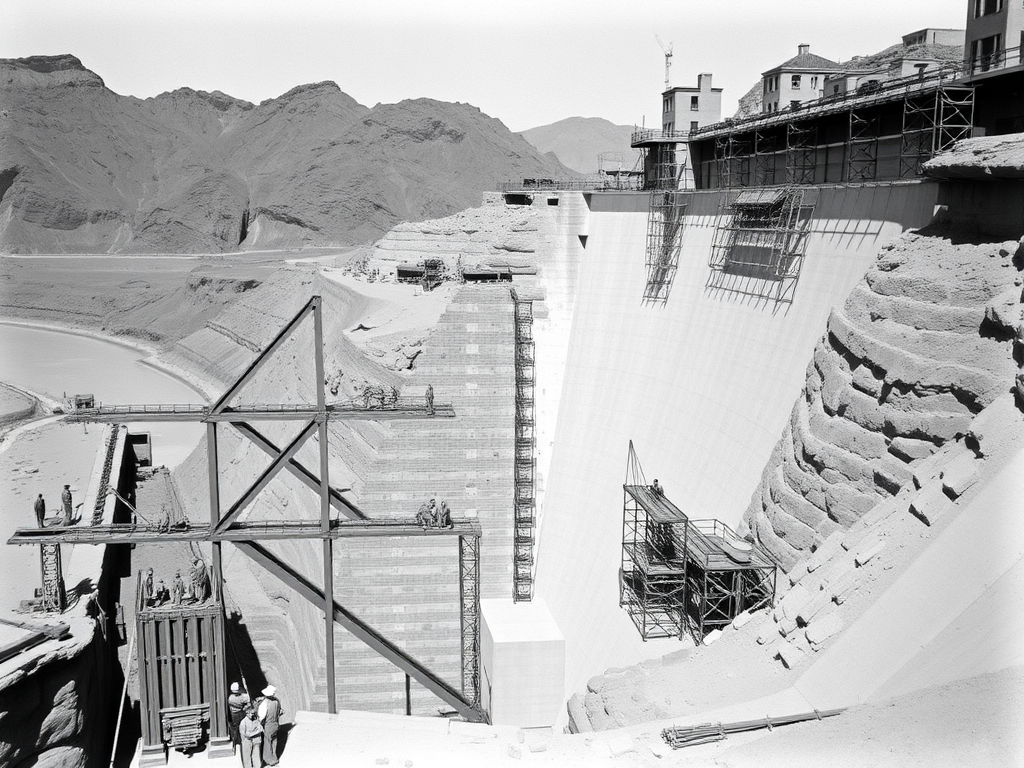
The construction of the Hoover Dam from 1931 to 1936 transformed Las Vegas forever. Thousands of workers flooded into the area, bringing money and creating demand for entertainment. The Nevada legislature legalized gambling in 1931, perfectly timed to capitalize on this influx of workers and tourists.
The dam not only provided much-needed jobs during the Great Depression but also ensured a steady supply of water and electricity that would fuel Las Vegas's future growth. The city began to establish itself as a destination, albeit a modest one compared to what was to come.
The Golden Age: Fremont Street and Downtown
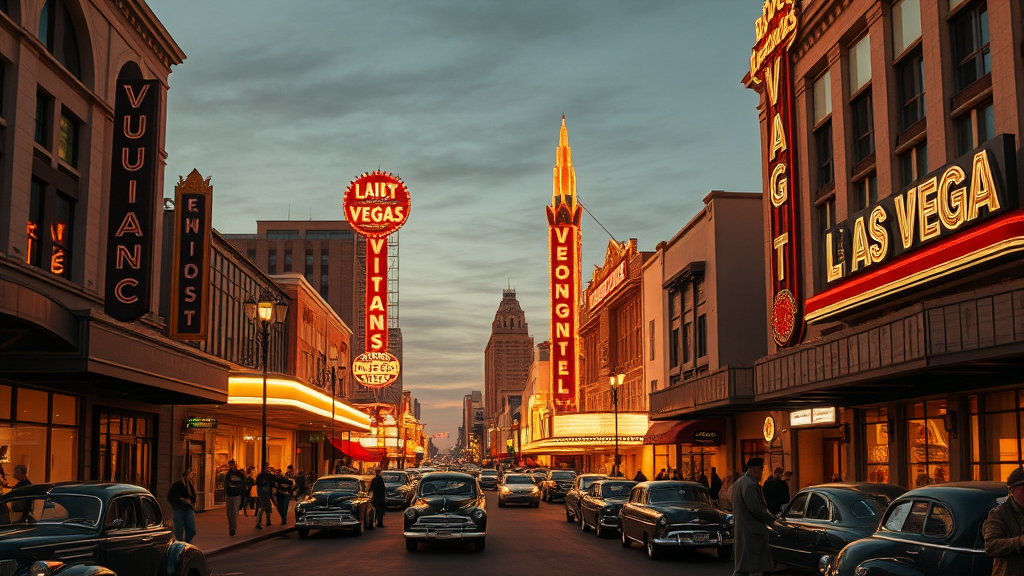
The 1940s saw the emergence of Fremont Street as 'Glitter Gulch,' downtown Las Vegas's entertainment district. Casinos like the Golden Nugget and the Horseshoe competed with increasingly elaborate neon signs, creating the dazzling nighttime spectacle that became synonymous with Las Vegas.
The El Rancho Vegas, opened in 1941 on what would become the Las Vegas Strip, established the template for future development: a hotel-casino resort built on the highway south of downtown. The Last Frontier (1942) and the Flamingo (1946) followed, with the latter backed by notorious mobster Bugsy Siegel.
The Strip Rises: 1950s-1960s
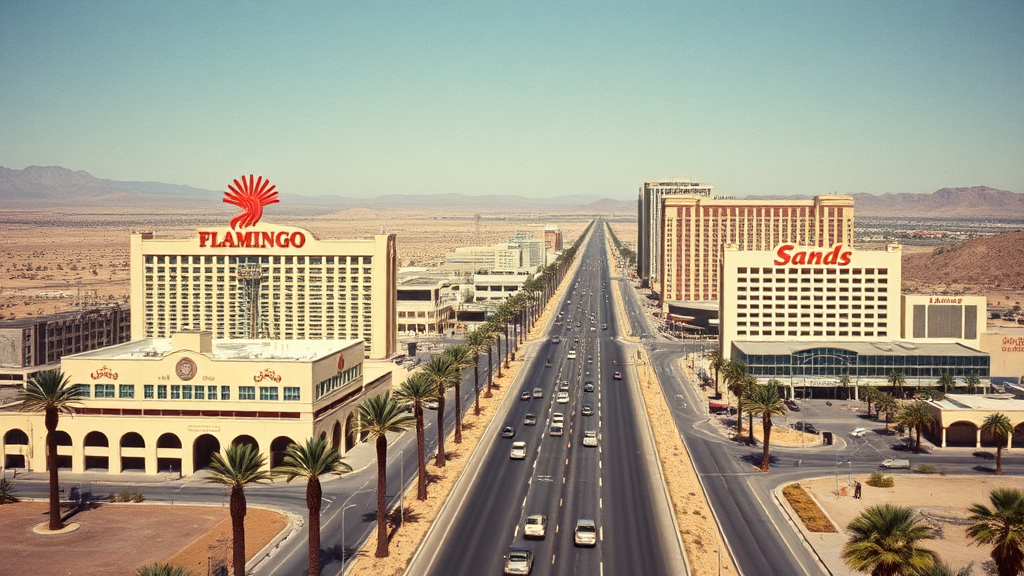
The 1950s and 1960s marked the golden age of Las Vegas. Iconic properties opened one after another: the Desert Inn (1950), the Sahara (1952), the Sands (1952), the Riviera (1955), the Dunes (1955), the Tropicana (1957), and the Stardust (1958). Each tried to outdo the others with lavish showrooms, gourmet restaurants, and themed architecture.
This era also saw the rise of the 'Rat Pack' – Frank Sinatra, Dean Martin, Sammy Davis Jr., Joey Bishop, and Peter Lawford – who made the Copa Room at the Sands their headquarters. Their performances cemented Las Vegas's reputation as the entertainment capital of the world.
Behind the glamour, organized crime figures controlled many casinos, using them to launder money and skim profits. The mob's influence shaped Las Vegas's culture and mystique, though it would eventually lead to federal scrutiny.
Corporate Las Vegas: The 1970s-1980s
The early 1970s brought significant change. Howard Hughes, the eccentric billionaire, had purchased several casinos in the late 1960s, beginning the transition from mob control to corporate ownership. The Nevada Gaming Commission strengthened regulations, making it easier for publicly traded corporations to own casinos.
In 1971, the International Hotel (now the Westgate) opened with 1,512 rooms, making it the world's largest hotel. Elvis Presley's residency there from 1969 to 1976 attracted thousands of fans and established the modern Vegas residency model.
The 1980s saw continued growth but also increased competition from Atlantic City's new casinos. Las Vegas needed to reinvent itself once again.
The Mega-Resort Era: 1990s-2000s
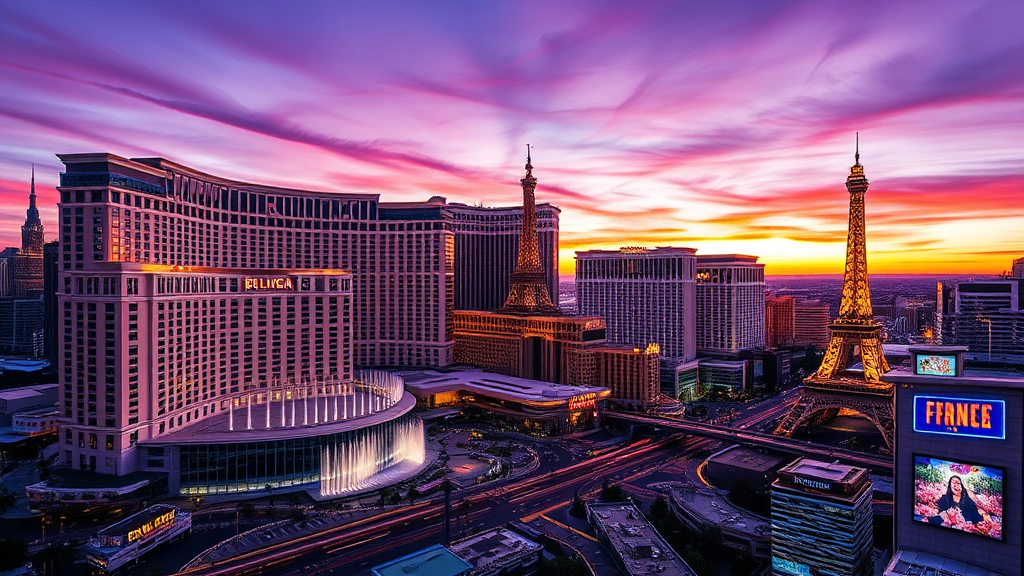
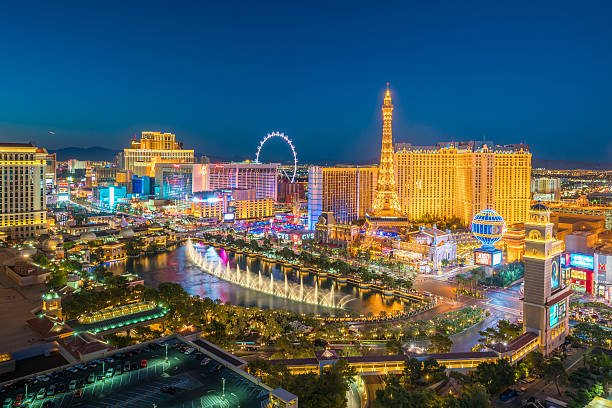
The modern Las Vegas landscape was created in an incredible building boom from 1989 to 2000. Steve Wynn opened the Mirage in 1989, featuring a tropical theme, white tigers, and an erupting volcano. Its success triggered a development frenzy.
Mega-resorts rose one after another: Excalibur (1990), Treasure Island (1993), Luxor (1993), MGM Grand (1993), Monte Carlo (1996), New York-New York (1997), Bellagio (1998), Mandalay Bay (1999), The Venetian (1999), and Paris Las Vegas (1999). These weren't just casinos – they were themed destinations with thousands of rooms, world-class restaurants, shopping, and entertainment.
The strategy worked brilliantly. Las Vegas transformed from a gambling destination into a full-scale resort city that appealed to families, foodies, shoppers, and convention-goers, not just gamblers.
21st Century Las Vegas
The 2000s brought even more ambitious projects. Wynn Las Vegas (2005) and Encore (2008) raised the bar for luxury. The Cosmopolitan (2010) and Aria (2009) introduced contemporary design aesthetics. City Center, opened in 2009, became the largest privately funded construction project in U.S. history.
The 2008 financial crisis slowed development, but Las Vegas proved resilient. The city diversified beyond gambling, becoming a premier destination for nightclubs, celebrity chef restaurants, high-end shopping, and spectacular shows by Cirque du Soleil and music superstars.
Professional sports arrived with the NHL's Vegas Golden Knights in 2017 and the NFL's Las Vegas Raiders in 2020. The city successfully hosted major events like the NBA Summer League and became a contender for the Super Bowl and other premier sporting events.
Looking Forward
Today, Las Vegas welcomes over 40 million visitors annually and continues to evolve. New projects like Resorts World (2021) and future developments promise to keep Las Vegas at the forefront of entertainment and hospitality innovation.
From a desert railroad stop to the entertainment capital of the world, Las Vegas has continually reinvented itself. The city that once relied on organized crime now hosts Fortune 500 companies. The Strip that featured cowboy-themed motels now boasts some of the world's most expensive resort properties. Through it all, Las Vegas has maintained its unique identity as a place where anything seems possible – a glittering oasis where dreams are made and fortunes won and lost.
As Las Vegas looks to the future, one thing remains certain: this city built on ambition, spectacle, and showmanship will continue to surprise and reinvent itself for generations to come.