The Complete History of Las Vegas
From ancient desert oasis to the Entertainment Capital of the World
The Ancient Past: Prehistoric Las Vegas
The story of Las Vegas begins long before neon lights and casinos. Archaeological evidence shows that the Las Vegas Valley was inhabited by the Paleo-Indians approximately 13,000 years ago. These early peoples were nomadic hunter-gatherers who followed animal herds and seasonal plant resources across the Mojave Desert.
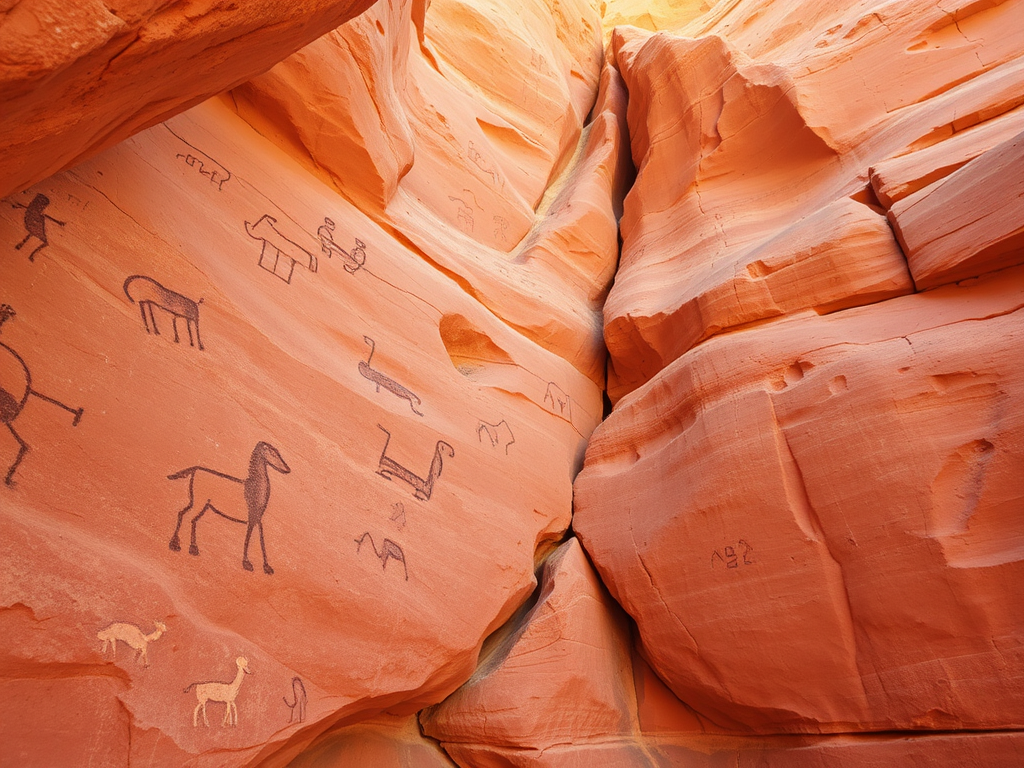
Around 300 CE, the Ancestral Puebloans (formerly called Anasazi) arrived in the region. They built permanent settlements and practiced agriculture along the Las Vegas Wash and near the springs. The remains of their pueblos and extensive rock art can still be found at sites like Valley of Fire State Park, providing a window into the sophisticated culture that thrived here over a millennium ago.
By 1150 CE, the Ancestral Puebloans had mysteriously abandoned the area, likely due to prolonged drought. The Southern Paiute people, who arrived around 1300 CE, became the dominant inhabitants. They lived in brush shelters called "kish" and practiced a semi-nomadic lifestyle, utilizing the valley's springs and hunting small game. When European explorers arrived centuries later, the Paiute were the region's stewards.
Spanish Explorers and the Mexican Period (1829-1848)
The first European to document the Las Vegas Valley was Rafael Rivera, a young Mexican scout with the Antonio Armijo trading expedition. On December 25, 1829, Rivera ventured off the Old Spanish Trail and discovered the artesian springs that gave the valley its name—Las Vegas, Spanish for "The Meadows." The abundant water and vegetation were a welcome sight in the harsh desert.
The Old Spanish Trail became an important trade route connecting Santa Fe to Los Angeles, and Las Vegas served as a crucial watering stop. The springs could support both horses and men on the arduous journey across the Mojave Desert. During this period, the valley remained largely uninhabited except by the Paiute people and occasional travelers.
In 1844, explorer John C. Frémont led a U.S. Army mapping expedition through the valley and documented the springs in his reports, bringing wider attention to the area. When the Mexican-American War ended in 1848, the Las Vegas Valley became part of the United States under the Treaty of Guadalupe Hidalgo.
The Mormon Fort and Early Settlement (1855-1905)
In June 1855, Brigham Young, leader of the Church of Jesus Christ of Latter-day Saints, sent 30 missionaries to establish a settlement in Las Vegas Valley. Led by William Bringhurst, the group built a fort near the springs to serve as a way station between Salt Lake City and Los Angeles, and to teach farming and Christianity to the Paiute people.
The Las Vegas Mormon Fort became the first permanent non-indigenous settlement in the valley. However, the mission faced numerous challenges: difficult farming conditions, scorching summer heat, internal disputes, and tensions with local Paiutes. The discovery of lead deposits nearby prompted Young to refocus the mission on mining, but this venture also proved unprofitable.
By 1857, the Mormon settlers had abandoned the fort. The property passed through various hands and served different purposes over the following decades—as a ranch, a way station, and eventually was partially subsumed by the growing railroad town. Today, a remnant of the original fort is preserved as a state park, the oldest building in Las Vegas.
During this period, Octavius Decatur Gass purchased the fort and surrounding land in 1865, developing it into the Los Vegas Rancho. The ranch covered 640 acres and served travelers on the Mormon Trail. When Gass defaulted on a loan in 1881, Archibald Stewart took over the property. After Stewart's murder in 1884, his widow Helen Stewart managed the ranch for the next two decades, becoming one of the most prominent figures in early Las Vegas history.
Birth of Modern Las Vegas: The Railroad Era (1905-1931)
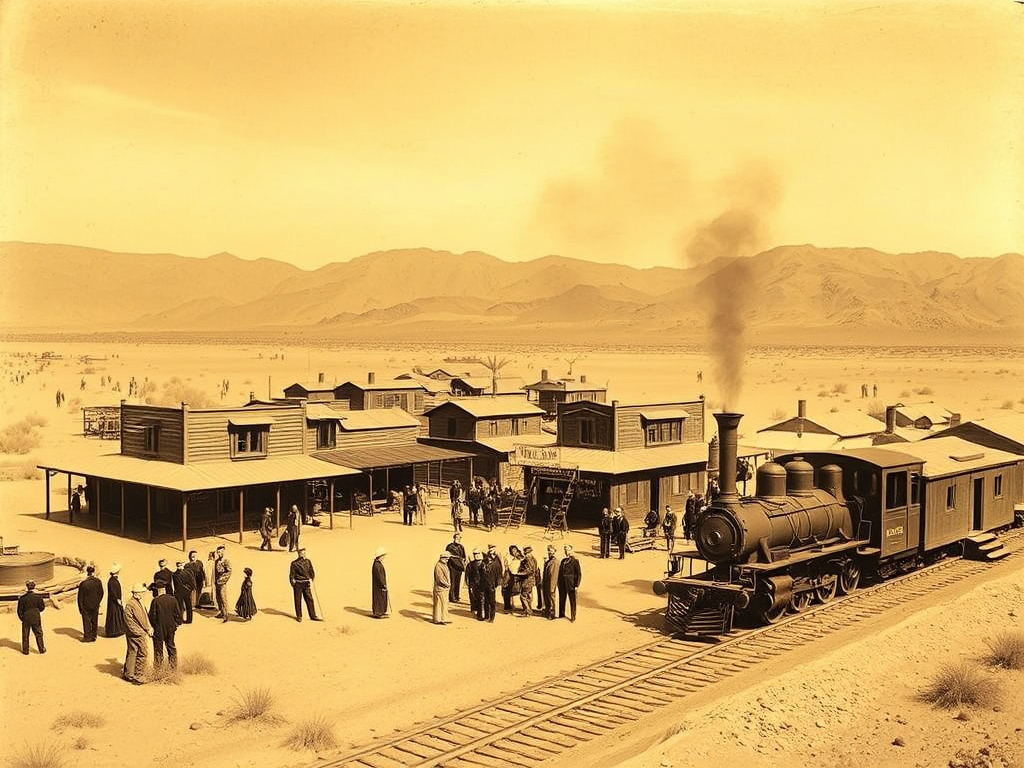
Modern Las Vegas was born on May 15, 1905, when the San Pedro, Los Angeles and Salt Lake Railroad held an auction to sell 1,200 lots of land. The railroad needed a division point halfway between Salt Lake City and Los Angeles, and Las Vegas—with its water supply and strategic location—was perfect. The auction attracted hundreds of eager buyers hoping to get in on the ground floor of a new frontier town.
Within days, tents and wooden structures sprang up along Fremont Street and Main Street. Saloons, hotels, stores, and boarding houses opened to serve railroad workers and travelers. Las Vegas was incorporated as a city in 1911, and by 1920, the population had grown to about 2,300 residents.
The early town had a rough-and-tumble character typical of Western railroad towns. Block 16, located in the heart of downtown, became the red-light district where gambling, drinking, and prostitution were tolerated (though not entirely legal). This permissive attitude toward vice would become a defining characteristic of Las Vegas culture.
In 1931, two pivotal events occurred that would shape Las Vegas's destiny: the Nevada legislature legalized gambling, and construction began on the Boulder Dam (later renamed Hoover Dam). These simultaneous developments created the perfect storm for Las Vegas's transformation from a sleepy railroad town into a unique American city.
The Hoover Dam Era: Vegas Awakens (1931-1941)
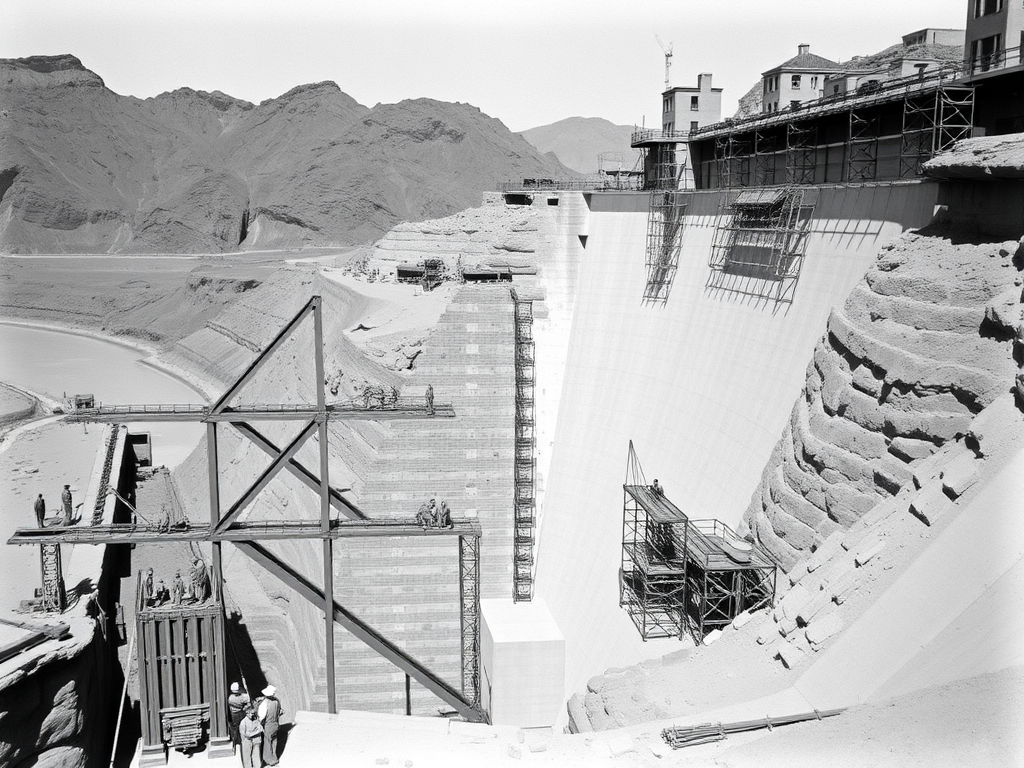
The construction of Hoover Dam from 1931 to 1936 brought thousands of workers and their families to the area. At its peak, more than 5,000 men labored in the brutal desert heat, working around the clock in shifts. These workers needed places to eat, sleep, and most importantly, be entertained during their time off.
Las Vegas was perfectly positioned to meet these needs. The newly legalized casinos along Fremont Street—including the Northern Club, Las Vegas Club, and Boulder Club—welcomed dam workers with open arms. The Apache Hotel (1932) and Hotel Nevada (1931, later the Golden Gate) provided accommodations. The town's population swelled from 5,000 in 1930 to 8,400 by 1940.
The dam's completion in 1936 could have spelled disaster for Las Vegas—what would happen when all those workers left? But the city had already established itself as a destination. The dam itself became a major tourist attraction, and quick divorce laws (enacted in 1931, requiring only six weeks of residency) attracted a new clientele: wealthy women who would spend six weeks at a "dude ranch" or hotel while waiting for their divorces to be finalized.
Even more crucially, the dam provided Las Vegas with reliable water and electricity—essential resources that would fuel the city's explosive growth in the decades to come. The federal government's willingness to invest in massive infrastructure projects in the desert showed that Las Vegas was viable, attracting further investment.
The Birth of the Strip (1941-1950)
While downtown Fremont Street flourished, a new chapter in Las Vegas history was about to begin on Highway 91, south of the city limits. Los Angeles hotelier Thomas Hull observed that tourists often stopped at his hotel on the highway into Los Angeles. In 1941, he opened El Rancho Vegas, the first resort-style hotel-casino on what would become the Las Vegas Strip.
El Rancho Vegas featured 110 rooms, a casino, restaurant, and nightclub, all in a Spanish mission-style building surrounded by palm trees. The property offered free parking—crucial for automobile tourists—and represented a new concept: a self-contained resort where guests could stay, dine, gamble, and be entertained without ever leaving the property.
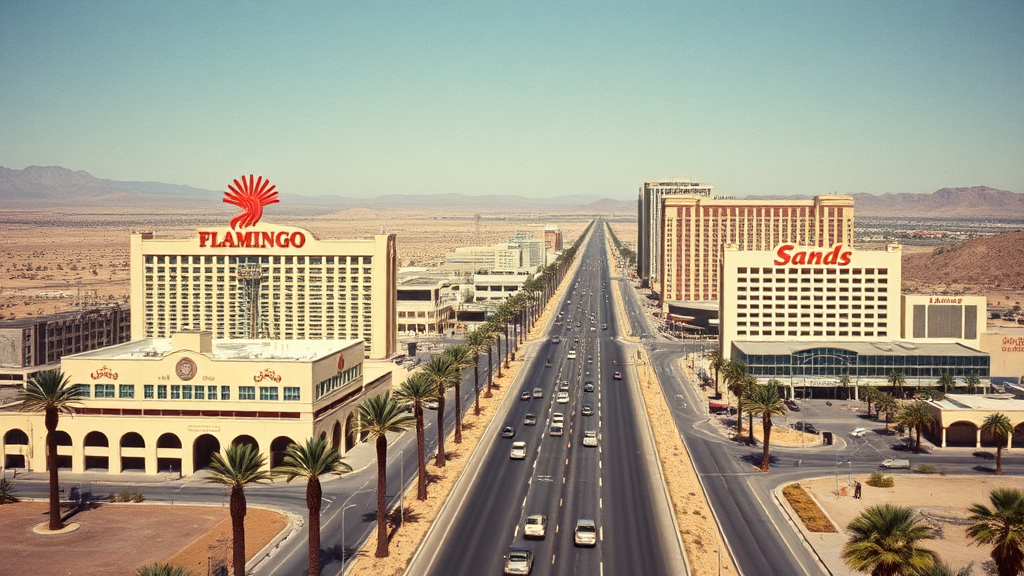
In 1942, the Last Frontier opened nearby, featuring a Western theme. But it was the Flamingo, opened in December 1946, that truly established the Strip's potential. Built by Billy Wilkerson and financed by mobster Benjamin "Bugsy" Siegel, the Flamingo was the most luxurious resort Las Vegas had seen, with lush landscaping, a showroom featuring major entertainment, gourmet dining, and upscale accommodations.
The Flamingo's opening was initially a disaster—it lost money and Siegel was murdered by his mob partners in June 1947. However, under new management, the resort became profitable, proving that luxury could succeed in the desert. The Flamingo's eventual success attracted more investors (many with organized crime connections) who saw Las Vegas as a golden opportunity.
World War II temporarily slowed Las Vegas's growth, but also brought more people to the region. The Las Vegas Army Gunnery School (later Nellis Air Force Base) opened in 1941, and the Basic Magnesium plant in nearby Henderson employed thousands. After the war, many veterans who had trained in Nevada returned with their families, providing a stable population base.
The Golden Age: Glitz, Glamour, and the Rat Pack (1950s-1960s)
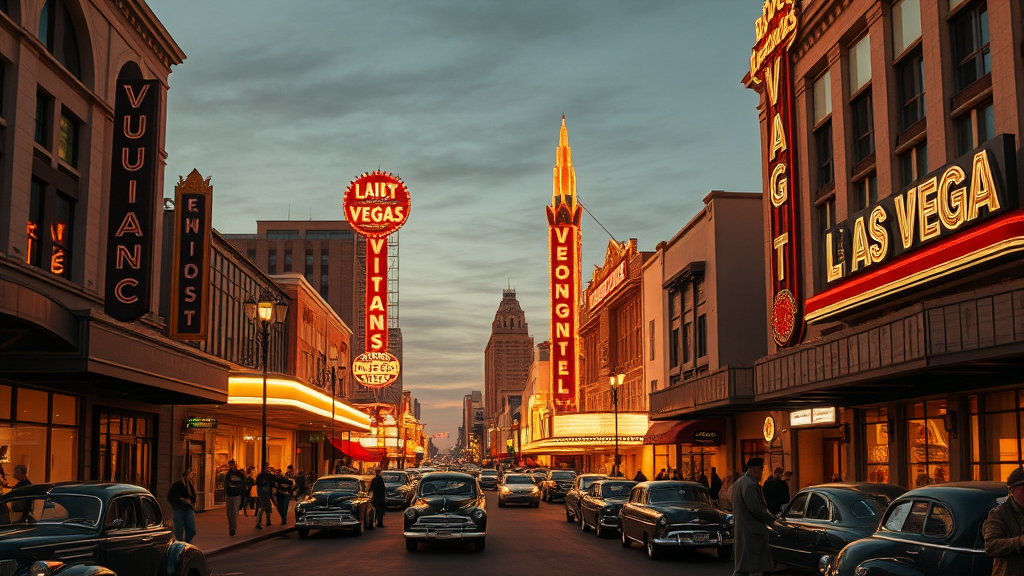
The 1950s witnessed an unprecedented building boom. Major resorts opened in rapid succession: the Desert Inn (1950), Sahara (1952), Sands (1952), Showboat (1954), Riviera (1955), Dunes (1955), Hacienda (1956), Tropicana (1957), and Stardust (1958). Each property tried to outdo the others with lavish themes, spectacular shows, and celebrity entertainment.
The Sands became synonymous with the "Rat Pack"—Frank Sinatra, Dean Martin, Sammy Davis Jr., Peter Lawford, and Joey Bishop. Their performances at the Copa Room drew Hollywood elite and made Las Vegas the coolest place in America. Their 1960 Summit at the Sands coincided with filming of "Ocean's 11," cementing Las Vegas's image as a playground for the sophisticated and successful.
Downtown Fremont Street evolved into "Glitter Gulch," with ever-larger and more elaborate neon signs. The Golden Nugget (1946), Horseshoe (1951), and Fremont (1956) competed for attention with brilliant displays. The Pioneer Club's "Vegas Vic" cowboy sign became an icon, welcoming visitors to "Downtown Las Vegas."
Behind the glamorous façade, organized crime families from across America controlled most casinos. Meyer Lansky, Moe Dalitz, Tony Accardo, and others used Las Vegas to launder money from illegal activities and "skim" unreported profits from casino counting rooms. While this mob influence brought its share of violence and corruption, it also brought expertise, capital, and an entertainment vision that made Las Vegas unique.
The federal government, increasingly concerned about organized crime, launched investigations and pressure campaigns. The Kefauver Committee hearings (1950-51) exposed mob connections but did little to slow Las Vegas's growth. Nevada created the Gaming Control Board in 1955 to regulate the industry, though enforcement remained lax.
The 1960s also saw the rise of Las Vegas as a convention destination. The Las Vegas Convention Center opened in 1959, providing 90,000 square feet of exhibition space. Hotels added meeting facilities, and the city began marketing itself to corporate America as a place where business and pleasure could mix seamlessly.
The Hughes Era and Corporate Transformation (1966-1979)
In November 1966, billionaire Howard Hughes arrived in Las Vegas and checked into the Desert Inn's top floor. He never checked out. When the hotel's management asked him to leave so his suite could be rented to high rollers during New Year's, Hughes bought the entire property for $13.2 million.
Over the next four years, Hughes went on a buying spree, purchasing the Sands, Frontier, Castaways, Landmark, and Silver Slipper. He also acquired significant real estate, a local television station, and North Las Vegas Airport. His purchasing power—estimated at $300 million—made him the largest private landowner in Nevada.
While Hughes himself was an eccentric recluse who communicated only through Mormon intermediaries, his investment legitimized Las Vegas. Here was America's most famous billionaire putting his money into Vegas casinos. His corporate ownership structure also showed federal regulators that casinos didn't have to be mob-controlled.
In 1969, the Nevada legislature passed the Corporate Gaming Act, which made it easier for publicly traded corporations to own casinos without every shareholder needing to be individually licensed. This opened the floodgates for major corporations like Hilton, MGM, and Holiday Inn to enter the market.
The International Hotel opened in 1969 with 1,512 rooms, making it the world's largest hotel. Elvis Presley's opening performance began a seven-year residency that revitalized his career and established the modern Vegas headliner residency model. Elvis's success proved that family-friendly entertainment could coexist with (and enhance) casino gambling.
The 1970s brought growing pains. Atlantic City legalized casino gambling in 1976, providing competition on the East Coast. An economic recession slowed growth. But Las Vegas proved resilient, with properties like Caesars Palace (1966) continuing to expand and upgrade their facilities. The city's population grew from 127,016 in 1970 to 164,674 in 1980.
The 1980s: Growing Competition and the Need to Reinvent
The 1980s were challenging for Las Vegas. Atlantic City's casinos were thriving, drawing East Coast customers who might otherwise have flown to Vegas. Older Strip properties looked dated compared to Atlantic City's new facilities. Las Vegas's mob legacy, while romanticized in movies, was increasingly seen as outdated and unsavory.
Several older properties closed or struggled. The MGM Grand (now Bally's) suffered a devastating fire in 1980 that killed 85 people, highlighting safety concerns in older high-rise hotels. The incident led to stricter building codes and sprinkler requirements across the industry.
But visionary developers saw opportunity. In 1989, Steve Wynn opened the Mirage, a $630 million resort that would change Las Vegas forever. The Mirage wasn't just a casino with a hotel attached—it was a fully integrated destination resort with a tropical theme, white tigers, dolphins, a massive aquarium, and an erupting volcano out front.
The Mirage was a massive gamble (pun intended). Many industry experts predicted it would fail, believing no resort could generate enough revenue to justify such an enormous investment. They were spectacularly wrong. The Mirage was an instant success, generating $1 million per day in its first year and sparking the greatest building boom in Las Vegas history.
The Mega-Resort Revolution (1990-2000)
The 1990s witnessed an unprecedented construction boom. Developers realized that Las Vegas could compete not just on gambling, but on spectacle, luxury, and unique experiences. Themed mega-resorts rose one after another, each trying to outdo the last in ambition and scale:
- Excalibur (1990): A medieval castle with 4,008 rooms, briefly the world's largest hotel
- Treasure Island (1993): Pirate-themed resort featuring a full-scale naval battle show in front
- Luxor (1993): A 30-story pyramid with the brightest light beam in the world
- MGM Grand (1993): 5,005 rooms with a massive lion habitat and Wizard of Oz theme
- Fremont Street Experience (1995): Downtown's answer to the Strip—a pedestrian mall covered by a massive LED canopy
- Monte Carlo (1996): European elegance on the Strip
- New York-New York (1997): Recreating Manhattan's skyline complete with Statue of Liberty and Coney Island roller coaster
- Bellagio (1998): Steve Wynn's $1.6 billion masterpiece featuring dancing fountains and an art gallery
- Mandalay Bay (1999): Tropical paradise with a massive wave pool
- The Venetian (1999): Sheldon Adelson's $1.5 billion recreation of Venice with gondola rides and all-suite accommodations
- Paris Las Vegas (1999): Half-scale Eiffel Tower and Arc de Triomphe
In just one decade, Las Vegas added nearly 50,000 hotel rooms—more than many entire cities possess. The strategy was simple but brilliant: create experiences so unique and spectacular that people would come even if they didn't gamble. Las Vegas was transforming from "Sin City" into a family-friendly destination with theme parks, attractions, and entertainment for all ages.
The campaign to rebrand Las Vegas as family-friendly had mixed results. While many families did visit, the city's core appeal remained adult-oriented. By the late 1990s, Las Vegas began pivoting toward "What happens here, stays here" marketing that acknowledged its adult pleasures while adding sophistication.
This era also saw the rise of celebrity chefs opening restaurants in Las Vegas. Wolfgang Puck, Emeril Lagasse, and others established outposts that elevated Las Vegas dining from cheap buffets to world-class cuisine. High-end shopping followed, with Forum Shops at Caesars and the Grand Canal Shoppes at the Venetian attracting luxury brands.
The 21st Century: Luxury, Diversification, and Resilience (2000-Present)
The new millennium brought even more ambitious projects. Wynn Las Vegas (2005) and Encore (2008) raised the bar for luxury, with rooms starting at $300+ per night. The Palazzo (2007) expanded the Venetian. Planet Hollywood (2007) transformed the Aladdin into a modern pop-culture-themed resort.
The most ambitious project was CityCenter, a $9.2 billion mixed-use development that opened in 2009-2010. Featuring Aria, Vdara, Mandarin Oriental, and the Cosmopolitan, CityCenter brought contemporary architecture and design aesthetics to the Strip. It represented a bet that Las Vegas could attract a more sophisticated, affluent demographic.
The 2008 financial crisis hit Las Vegas hard. Several major projects were cancelled or delayed. Casino revenues plummeted as Americans cut back on discretionary spending. Unemployment in Las Vegas reached 14%. But the city proved resilient, adapting its business model and waiting out the recession.
The recovery brought renewed diversification. Las Vegas doubled down on nightclubs, with mega-clubs like XS, Hakkasan, and Omnia becoming major profit centers. Electronic dance music (EDM) found a home in Las Vegas, with top DJs earning millions for residencies. Pool parties evolved from afternoon relaxation to major entertainment events with celebrity hosts and premium pricing.
Professional sports finally came to Las Vegas. The NHL's Vegas Golden Knights debuted in 2017 and immediately captured the city's heart, reaching the Stanley Cup Finals in their inaugural season. The NFL's Oakland Raiders relocated to Las Vegas in 2020, playing in the spectacular new Allegiant Stadium. The NBA announced a potential expansion team, and Formula 1 signed a deal to race on the Strip itself.
The COVID-19 pandemic in 2020 dealt Las Vegas its biggest blow since the Great Depression. The Strip went dark for 78 days, an unprecedented shutdown. But the city rebounded faster than expected, demonstrating the fundamental strength of its appeal. Pent-up demand led to record-breaking revenues in 2021 and 2022.
The New Las Vegas: Innovation and Evolution (2020-Present)
Resorts World Las Vegas opened in 2021, the first new resort on the Strip in over a decade. The $4.3 billion property features Asian-inspired luxury and cutting-edge technology, including a massive LED facade visible from the airport.
The MSG Sphere opened in 2023, a $2.3 billion entertainment venue featuring the world's largest LED screen wrapped around a sphere-shaped building. U2's residency demonstrated the venue's immersive capabilities, creating experiences impossible anywhere else in the world.
Las Vegas continues to evolve beyond gaming. Major conventions like CES (Consumer Electronics Show) bring hundreds of thousands of visitors. The city has become a hub for technology companies, with Tesla's Gigafactory nearby and major data centers taking advantage of cheap electricity from Hoover Dam.
The Arts District downtown has emerged as a creative hub with galleries, boutiques, and restaurants. Container Park and other developments show Las Vegas's growing sophistication beyond the Strip. The city is investing in light rail and infrastructure improvements to handle continued growth.
The Enduring Appeal of Las Vegas
From prehistoric springs to glittering metropolis, Las Vegas's history is a uniquely American story of ambition, reinvention, and spectacle. The city has survived economic depressions, world wars, organized crime influence, regulatory crackdowns, intense competition, and a global pandemic—emerging stronger each time.
What makes Las Vegas unique isn't just the gambling—many places have casinos. It's the city's willingness to constantly reinvent itself, to tear down the old and build something new and more spectacular. It's the convergence of world-class entertainment, dining, shopping, and nightlife in one place. It's the adult freedom to indulge without judgment.
Today, over 42 million people visit Las Vegas annually, spending billions of dollars and creating hundreds of thousands of jobs. The city that was founded with a railroad auction in the desert has become one of the world's most recognizable destinations, a place where impossible dreams are built from sand and ambition.
As Las Vegas looks toward the future, one thing remains certain: this city will continue to surprise, innovate, and reinvent itself. The next chapter of Las Vegas history is being written right now, and if the past is any guide, it will be spectacular.
This comprehensive history captures the incredible transformation of Las Vegas from ancient desert oasis to modern entertainment capital. Whether you're a first-time visitor or a longtime resident, understanding this history enriches your appreciation of this extraordinary city.
Planning Your Next Vegas Trip?
Get personalized recommendations and discover the best of Las Vegas today!
Return to Vegas AgendaHistorical information compiled for entertainment and informational purposes